
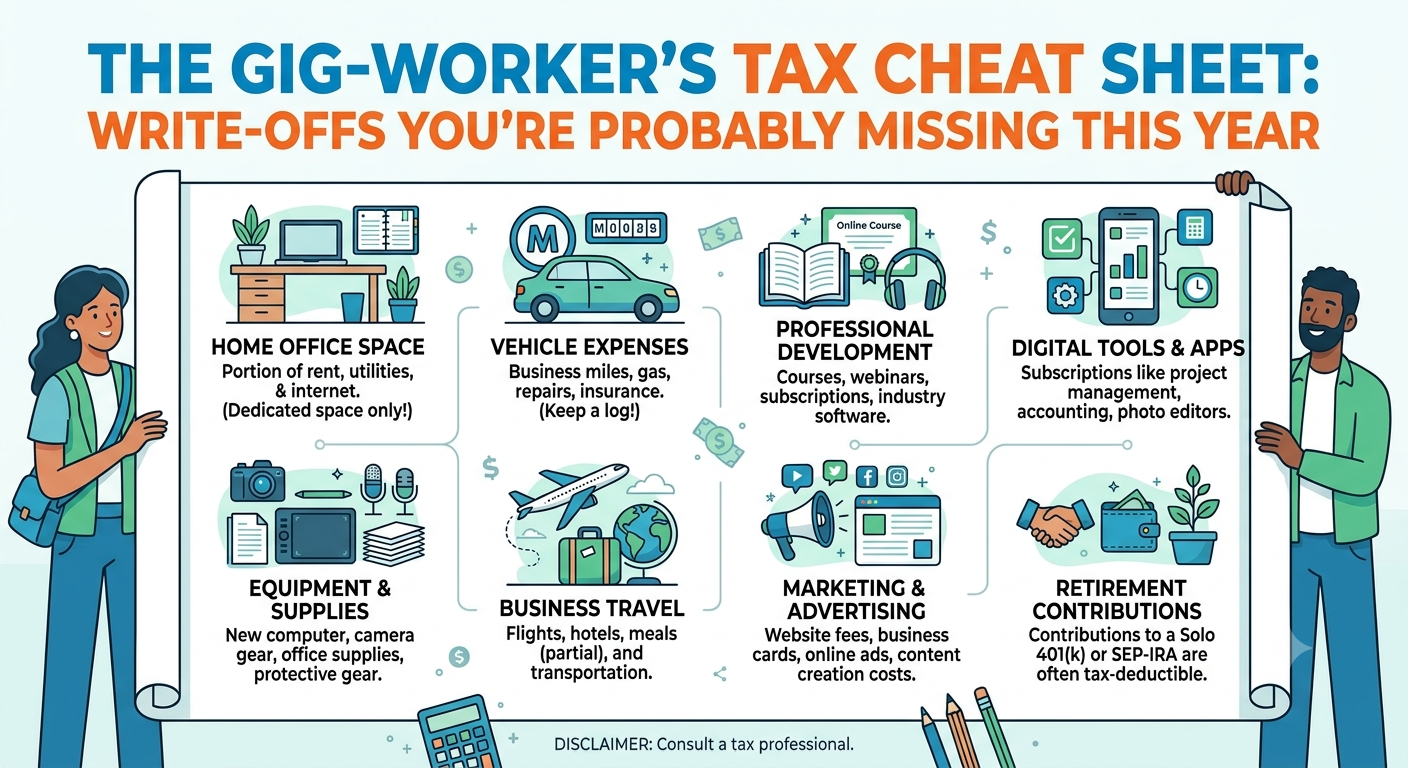
The Gig Worker’s Tax Cheat Sheet: Write-Offs You're Probably Missing This Year
The gig economy has changed how millions of people earn a living. Whether you drive for rideshare apps, deliver food, sell products online, freelance remotely, or create digital content, you're likely classified as self-employed—which means you're responsible for paying your own taxes.
While this comes with additional tax obligations, it also unlocks valuable deductions that traditional employees often can't claim.
Unfortunately, many gig workers leave hundreds—or even thousands—of dollars on the table every year simply because they don't know what expenses qualify.
This guide breaks down the most commonly missed tax write-offs, how they work, and how to organize your finances so you can reduce your taxable income legally and confidently.
Why Tax Deductions Matter
Unlike employees, gig workers are generally taxed on net profit, not total earnings.
Formula
Taxable Income =
Total Income − Eligible Business Expenses
Example
| Description | Amount |
|---|---|
| Total Income | $70,000 |
| Business Expenses | $15,000 |
| Taxable Income | $55,000 |
Even relatively small deductions throughout the year can add up to meaningful tax savings.
Common Sources of Gig Income
| Gig Type | Typical Income Sources |
|---|---|
| Freelancers | Writing, design, programming |
| Delivery Drivers | Food and grocery delivery |
| Rideshare Drivers | Passenger transportation |
| Online Sellers | E-commerce marketplaces |
| Content Creators | Sponsorships, ads, affiliate marketing |
| Consultants | Professional services |
| Tutors | Online or in-person lessons |
| Photographers | Events and commercial projects |
Estimated Business Expense Categories
Illustrative breakdown of common deductible expense categories.
Tax Write-Offs Many Gig Workers Miss
1. Home Office Deduction
If you use part of your home regularly and exclusively for business, you may qualify for a home office deduction.
Eligible expenses can include:
- Rent or mortgage interest (subject to local tax rules)
- Utilities
- Internet
- Home insurance
- Property taxes (where applicable)
- Repairs related to the workspace
| Expense | Potentially Deductible? |
|---|---|
| Office Desk | ✅ |
| Office Chair | ✅ |
| Bedroom Furniture | ❌ |
| Kitchen Remodel | ❌ |
2. Internet & Phone Bills
If you use your internet or phone for work, the business-use portion may be deductible.
Examples:
- Client calls
- Video meetings
- Uploading projects
- Business emails
- Social media management
Keep records showing how you estimate the business-use percentage.
3. Laptop, Monitor & Equipment
Many freelancers overlook equipment purchases.
Common deductions include:
- Laptop
- Desktop
- Monitor
- Keyboard
- Webcam
- Microphone
- External SSD
- Printer
- Business software
Technology Spending Breakdown
| Equipment | Example Business Use |
|---|---|
| Laptop | Client work |
| Monitor | Design or coding |
| Webcam | Meetings |
| Microphone | Podcasting |
| External Drive | Backups |
| Software | Editing, accounting, design |
4. Business Software
Monthly subscriptions often qualify.
Examples include:
- Accounting software
- Cloud storage
- Design tools
- Video editing software
- AI productivity tools
- Project management platforms
- CRM systems
5. Mileage and Vehicle Expenses
For delivery drivers, rideshare operators, and mobile freelancers, vehicle expenses are often one of the largest deductions.
Potentially deductible business travel includes:
- Client meetings
- Deliveries
- Business errands
- Travel between job sites
Keep detailed mileage logs throughout the year.
Frequently Claimed Expense Categories
Illustrative comparison of deduction categories by frequency.
6. Professional Education
Continuing education related to your current business may qualify.
Examples:
- Online courses
- Industry certifications
- Workshops
- Conferences
- Professional memberships
- Books directly related to your work
7. Marketing Expenses
Growing your business often involves deductible costs such as:
- Website hosting
- Domain registration
- Logo design
- Paid advertising
- Email marketing
- Business cards
- Promotional materials
8. Banking & Payment Processing Fees
Many freelancers overlook small recurring charges.
Examples:
- Payment processor fees
- Business bank account fees
- Wire transfer fees
- Currency conversion fees
- Merchant processing costs
These expenses can accumulate significantly over a year.
9. Business Travel
If a trip is primarily for business, eligible costs may include:
- Flights
- Hotels
- Public transportation
- Rental cars
- Conference registration
Personal sightseeing or vacation expenses generally aren't deductible.
10. Business Meals
Meals with clients or business partners may qualify under local tax rules if they are directly related to conducting business.
Always retain:
- Receipts
- Date
- Attendees
- Business purpose
11. Health Insurance (Where Eligible)
Self-employed individuals in some countries may be able to deduct eligible health insurance premiums, depending on tax laws and personal circumstances.
12. Retirement Contributions
Many self-employed retirement plans provide tax advantages while helping you build long-term savings.
Overlooked Tax Deductions
| Expense | Often Forgotten? |
|---|---|
| Domain renewals | ✅ |
| Cloud storage | ✅ |
| AI subscriptions | ✅ |
| Stock photos | ✅ |
| Online portfolio | ✅ |
| Zoom subscription | ✅ |
| Accounting software | ✅ |
| Workspace lighting | ✅ |
| Office décor used for business | ✅ |
| Business insurance | ✅ |
Tax Record Checklist
Maintain organized records throughout the year.
| Document | Keep? |
|---|---|
| Receipts | ✅ |
| Invoices | ✅ |
| Bank Statements | ✅ |
| Mileage Logs | ✅ |
| Business Contracts | ✅ |
| Software Receipts | ✅ |
| Travel Records | ✅ |
| Tax Forms | ✅ |
Digital storage can make retrieval much easier during tax season.
Simple Expense Tracking Workflow
Income Received
        │
        ▼
Save Receipt
        │
        ▼
Categorize Expense
        │
        ▼
Record in Accounting Software
        │
        ▼
Monthly Review
        │
        ▼
Tax Filing
Common Tax Mistakes
| Mistake | Better Practice |
|---|---|
| Mixing business and personal expenses | Use separate accounts |
| Losing receipts | Store digital copies |
| Waiting until tax season | Track expenses monthly |
| Forgetting subscriptions | Review recurring payments |
| Not tracking mileage | Use a mileage log |
| Ignoring small expenses | Record every legitimate business cost |
Tips to Maximize Legitimate Deductions
- Separate personal and business finances.
- Save receipts as soon as purchases are made.
- Review recurring subscriptions every quarter.
- Track mileage consistently if you use a vehicle for work.
- Keep documentation that supports the business purpose of each expense.
- Reconcile income and expenses monthly rather than waiting until year-end.
- Consider consulting a qualified tax professional if your situation is complex or involves multiple income sources or countries.
Final Thoughts
Gig work offers flexibility and independence, but it also requires a proactive approach to taxes. By understanding which business expenses may qualify as deductions, maintaining organized records, and reviewing your finances regularly, you can reduce your taxable income while staying compliant with tax laws.
Remember that tax rules vary by country—and often by state or province—so always verify eligibility based on your local regulations. A well-maintained expense log and informed tax strategy can make a significant difference in how much of your hard-earned income you keep each year.