

Choosing between an Apple iPhone and a Samsung Galaxy is more than a debate over operating systems—it is a major financial decision. Industry mobile statistics reveal that premium smartphone buyers hold onto their devices longer than ever, with average ownership cycles crossing the 3.9-year mark. Furthermore, consumer trade-in and upgrade programs returned over $1.43 billion to shoppers in recent quarters, proving that maximizing a phone's lifecycle value is critical.
When looking for true long-term value, you have to weigh upfront retail costs, depreciation rates, ecosystem longevity, and strategic discounts.
1. Upfront Cost vs. Long-Term Depreciation
While both tech giants command premium prices for their flagship models (such as the iPhone Pro and Samsung Galaxy Ultra series), their value retention differs significantly on the secondary market.
Apple iPhone: Exceptional Resale Value
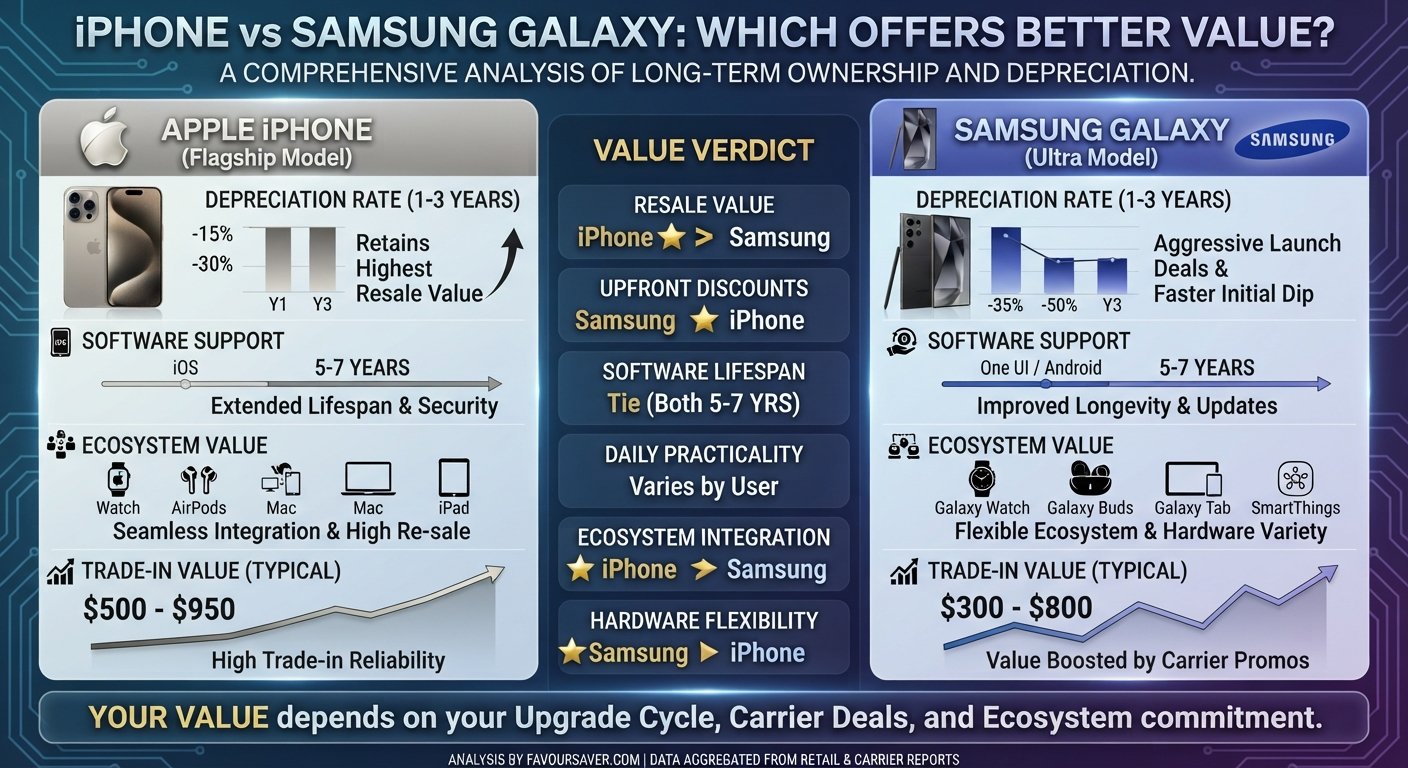
Historically, iPhones hold their market value better than almost any Android competitor. Because Apple supports its devices with software updates for 5 to 7 years, a 3-year-old iPhone retains a higher percentage of its original price, lowering the net cost of ownership when it is time to upgrade.
Samsung Galaxy: Aggressive Initial Discounts & Trade-Ins
Samsung phones often experience faster initial depreciation on the open market, but Samsung and major carriers counter this with aggressive promotional trade-in values and launch-window bonuses. If you know how to leverage trade-in credits, a Galaxy device can often match or beat an iPhone's net affordability.
iPhone vs Samsung Galaxy Value Comparison
| Feature / Metric | Apple iPhone Flagship | Samsung Galaxy Flagship | Smart Shopping Strategy |
| Resale / Trade-In Value | High (Slow depreciation) | Moderate to High (Boosted by carrier promos) | Utilize |
| Software Support Lifespan | 5–7 Years of iOS updates | 5–7 Years of Android/Security updates | Prioritize longevity to lower annual cost. |
| Average Promo Savings | 10% – 20% (Mainly gift cards/trade-ins) | 15% – 35% (Direct discounts & bundle deals) | Stack seasonal sales with |
| Ecosystem Cost | High (Proprietary accessories) | Moderate (Flexible cross-brand accessory use) | Shop multi-brand accessories via |
[IMAGE: Infographic comparing iPhone and Samsung Galaxy depreciation rates, software lifespans, and trade-in value yields | Alt Text: Side-by-side comparison chart of iPhone vs Samsung value retention and cost savings]
2. Insider Strategies to Maximize Your Smartphone Savings
Paying full retail price for a flagship smartphone is completely optional if you master strategic purchasing windows and discount stacking.
Expert Shopping Tip: Over 88% of online tech shoppers search for promotional discounts before buying mobile devices. Never purchase straight from the carrier homepage without first checking dedicated deal hubs like
for active activation promos, accessory add-ons, or trade-in multipliers. FavourSaver Smartphone Discounts
How to Cut the Cost of Your Next Phone:
Leverage Launch Pre-Order Promos: Both Apple and Samsung roll out double storage tiers, free gift cards, or inflated trade-in values during the first two weeks of a new release.
Shop Certified Refurbished Inventory: Buying a certified pre-owned flagship from the previous generation saves up to 40% while still securing full manufacturer warranties.
Combine Retailer Cash-Back Portals: Use stacked browser extensions and
affiliate discount links
3. Which Ecosystem Offers More Day-to-Day Practicality?
Value isn't just about cash—it is also about how well a device integrates into your daily workflow:
The iPhone Advantage: Seamless cross-device continuity (Mac, iPad, Apple Watch) and optimized app performance make it exceptionally user-friendly and reliable over multi-year cycles.
The Samsung Advantage: Greater hardware flexibility, customizable multitasking, multi-window support, and advanced multitasking tools give power users more utility for their dollar.
Summary & Verdict
Deciding whether the iPhone or Samsung Galaxy offers better value depends on your upgrade habits. If you want maximum cash back upon resale after 3 to 4 years, the iPhone holds the crown. If you prefer immediate upfront savings, deep carrier trade-in bonuses, and flexible hardware features, the Samsung Galaxy delivers unbeatable bang for your buck.
Ready to secure your next mobile upgrade without paying retail? Before you checkout, visit