+

Discover expert strategic insights, saving updates, and premium dynamic consumer guides.
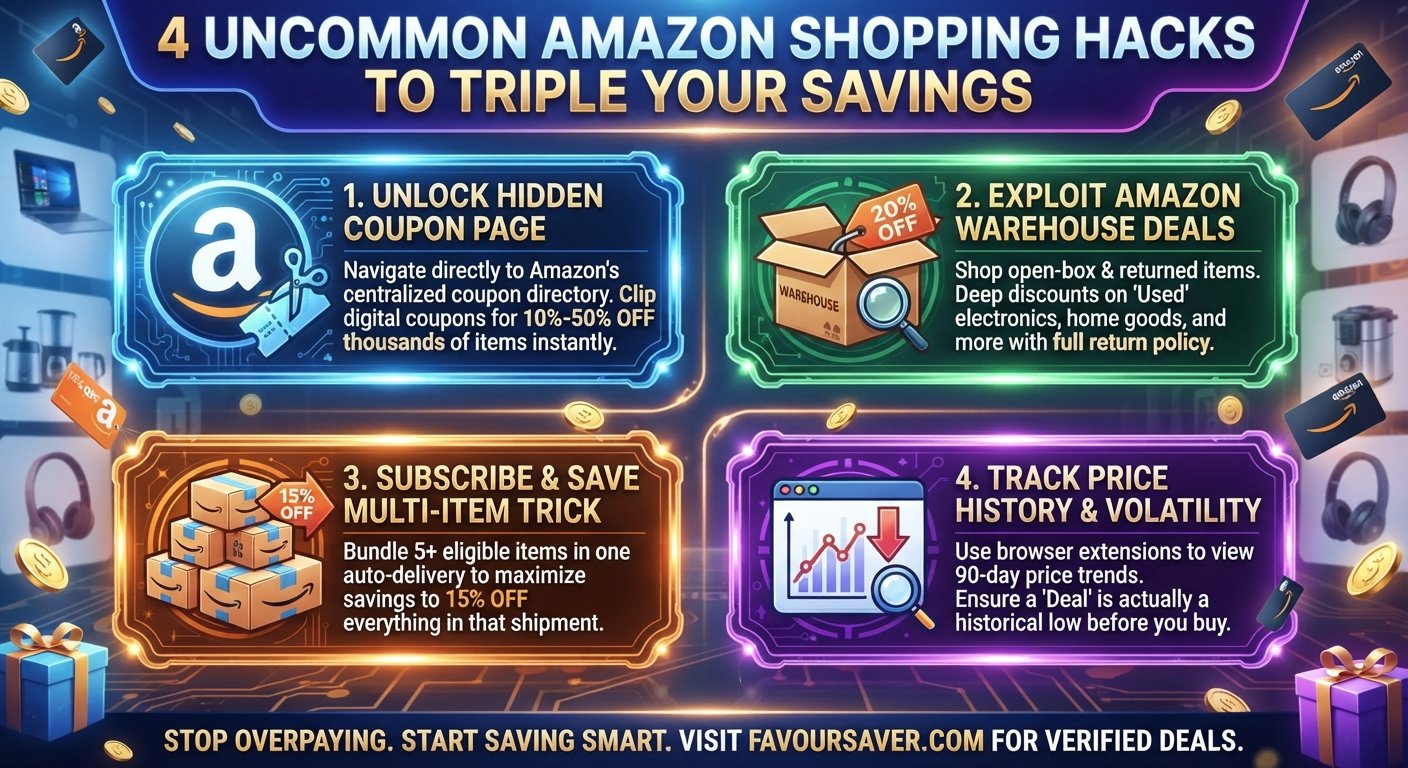
Millions of shoppers browse Amazon daily, yet nearly all of them overpay by sticking to surface-level navigation. While casual buyers rely purely on front-page lightning deals, seasoned bargain hunters use advanced, lesser-known mechanics to triple their savings.Industry data shows that over 64% of online shoppers actively search for discounts before buying, but very few know how to stack hidden loopholes on major retail platforms. Moving beyond standard checkout routines allows you to unlock deep price cuts that most consumers never see.Hack 1: Mine the Under-the-Radar Amazon Coupon PageMost shoppers wait for a coupon code to magically appear at checkout, completely unaware that Amazon hosts a massive, centralized digital clipping hub.Instead of searching product by product, you can navigate directly to Amazon’s hidden coupon directory, where thousands of items across electronics, home goods, and beauty carry instant clip-to-apply discounts ranging from 10% to 50% off.The Execution: Always check the green or orange "Clip Coupon" box directly beneath a product's price before adding it to your cart.Stacking Advantage: These clipped digital coupons often stack automatically with Subscribe & Save discounts or promotional gift card offers.Insider Shopping Tip: Bookmark direct portal directories and pair them with external verification tools. You can cross-reference these clipped savings against hand-tested offers listed on [Insert Internal Link: Verified Amazon Deals Category] to ensure you are capturing the absolute lowest net price.Hack 2: Exploit Warehouse and Refurbished Clearance LoopsBuying brand-new items every time severely limits your purchasing power. Amazon’s secondary marketplace—specifically Amazon Resale (formerly Warehouse) and Renewed—offers deep discounts on open-box, returned, or professionally inspected items.Condition Transparency: Items returned due to damaged outer packaging are heavily marked down (often 15% to 50% off) while retaining full return windows and standard manufacturer warranties.The Savings Multiplier: Look for secondary "extra discount at checkout" clearance events that Amazon frequently runs on specific warehouse categories to clear out excess return inventory.[IMAGE: Infographic displaying step-by-step navigation for Amazon Warehouse and secret discount sections | Alt Text: How to find Amazon Warehouse and hidden discount sections]Amazon Shopping Hacks Summary TableTo help you visualize how these uncommon strategies compare in effort versus financial payoff, review the savings breakdown below:Uncommon Hack StrategyPrimary MechanismAverage Potential SavingsEffort LevelCentralized Coupon ClippingUtilizing hidden digital coupon landing pages10% - 50% off retailLow (Instant click)Amazon Warehouse / ResaleBuying open-box or returned items15% - 50% offLow (Filtering search results)Hidden Subscribe & Save TrickEnrolling in bulk subscriptions, then managing schedulesUp to 15% extra discountMediumThird-Party Price History AuditTracking historical price volatility via trackersAvoiding inflated "sale" markupsLow (Using browser tools)Warning: When utilizing the Subscribe & Save loophole for a one-time discount, remember to manage your subscriptions dashboard immediately after your order ships to prevent unwanted recurring shipments.Hack 3: Leverage the Subscribe & Save Multi-Item TrickThe "Subscribe & Save" feature is typically marketed toward recurring household items like paper towels or coffee, but smart shoppers use it strategically for structured price drops.When you add eligible items to a single Subscribe & Save delivery window, your baseline discount on items in that shipment can scale up to 15% off.The Play: Shoppers often bundle low-cost consumable items to hit scheduling thresholds, lock in the maximum discount across the order, and then adjust or cancel future deliveries right after the initial package arrives.Hack 4: Track True Volatility with Price History ArchivesRetailers frequently fluctuate prices or raise baseline costs right before major shopping events, creating the illusion of a massive markdown.The Strategy: Never trust a "Deal of the Day" badge at face value. Integrate reliable browser-based price history archives to view a product's 90-day pricing graph.The Payoff: This ensures you only buy when an item hits its verified historic low, saving you from marketing gimmicks. Pair these historical insights with live promo codes found on [Insert Affiliate Link: Top Retailer Coupon Page] to maximize your savings stack.The VerdictMastering Amazon shopping requires looking past the standard product listing page. By leveraging hidden digital coupon directories, exploring open-box warehouse inventory, and using multi-item subscription tricks, you can drastically increase your overall savings on routine online purchases.Ready to stop paying full price and unlock insider-level discounts on your favorite tech, home goods, and essentials? Stop guessing at checkout. Visit favoursaver.com today to explore hand-tested, verified coupon codes, exclusive promotional offers, and unbeatable savings strategies!

Booking flights and hotel stays often feels like navigating a shifting dynamic-pricing algorithm designed to squeeze maximum revenue out of travelers. However, airlines and major hotel chains regularly leave doors open for strategic savings through targeted promotional rates, unpublished corporate codes, regional pricing loops, and app-exclusive discounts.Industry reports highlight that over 70% of all travel bookings occur online, yet nearly 89% of shoppers abandon online travel agency (OTA) carts before checkout—frequently due to unexpected fees or missing out on lower rates. By mastering promo code discovery, mobile application routing, and bundling tactics, smart travelers routinely slash total itinerary costs by 15% to 40% without sacrificing comfort.1. Hack Flight Bookings with App-Only & Regional PromosAirlines aggressively incentivize mobile bookings to reduce customer acquisition costs and build direct digital relationships.App-Exclusive Discount Codes: Major carriers and flight aggregators reserve special introductory vouchers (often $15 to $50 off base fares) exclusively for first-time app transactions.Regional Currency Routing: Search for flights using a VPN set to the origin country, or switch the airline site's currency setting to local currency. Foreign conversion rates can occasionally bypass region-locked price floors.Airline Newsletter Flash Codes: Join carrier email lists using a secondary email. Airlines routinely distribute 24-hour flash sale codes (e.g., 20% off target routes) directly to subscribers.Insider Tip: Clear your browser cookies and open incognito windows prior to conducting flight searches. Dynamic pricing models track search frequency and can artificially raise seat prices when they detect high buying intent.2. Unlock Secret Hotel Corporate & Promotional RatesHotels rarely run out of rooms, but they prefer quietly discounting inventory over publicly tanking their published rack rates.Leverage Corporate & Association Codes: AAA, AARP, student, military, and corporate affiliate partner codes consistently unlock 10% to 25% off standard room rates.Book Direct After OTA Research: Use aggregators to locate properties, then switch to the hotel's direct site. Enter active merchant vouchers or loyalty codes to trigger lowest-price guarantees and room upgrades.Stack Member Discounts: Sign up for free hotel loyalty programs to combine baseline member rates (usually 5% to 10% off) with seasonal promotional vouchers.[IMAGE: Step-by-step screenshot guide showing where to enter promo and corporate codes on hotel checkout pages | Alt Text: Step-by-step guide to applying hotel promotional and corporate discount codes at checkout]3. Exploit Flight + Hotel Package StackingBooking components individually often results in paying full retail for each piece of your trip. Bundling flights, accommodation, and car rentals unlocks access to wholesale rate buckets hidden from single-item searches.Access Secret Package Rates: Airlines and OTAs combine excess inventory into packages, applying deep discounts that mask individual item pricing.Apply Sitewide Vouchers: Enter high-value sitewide package coupons (such as "$100 off $1,000 package bookings") on top of already discounted wholesale bundles.Check Loyalty Stacking: Many platforms allow you to earn both airline miles and hotel loyalty points simultaneously on bundled bookings.Warning: Carefully verify cancellation policies on bundled promotional packages. While savings are higher, refund terms are often stricter than standalone flexible hotel bookings.4. Master Post-Booking Price Drops & Re-Booking HacksSecuring a lower price doesn't stop once you enter your payment details. Price fluctuations continue right up until your departure date.Re-book Flexible Rates: Choose refundable hotel options when using promotional codes. If a deeper promo code or flash sale launches closer to your stay, re-book at the lower rate and cancel the original penalty-free.Track Flight Price Drops: Take advantage of 24-hour free cancellation windows on domestic flights if a better promo code surfaces right after booking.Use Price Match Guarantees: Submit lower advertised rates found on third-party sites to claim price-match refunds plus bonus voucher credits.Travel Savings Strategy BreakdownBooking MethodBest ForTypical SavingsSuccess RateMobile App PromosLast-minute flights & single-night stays$15 – $50 OffHighCorporate/Loyalty CodesMajor chain hotels10% – 25% OffVery HighFlight + Hotel BundlesWeek-long vacations & international trips20% – 40% OffHighRe-Booking Price DropsLong-lead hotel stays15% – 30% OffMediumBook Your Dream Trip for LessUnlocking affordable travel is about knowing where to search and timing your promo code application correctly. By combining mobile-exclusive vouchers, corporate rate options, package bundling, and post-booking price monitoring, you can easily travel for a fraction of retail prices.Ready to start planning your next getaway? Head straight to our Qatar Airways Promo Code or browse our [Insert Internal Link: Hotel & Flight Discounts Category] to claim fully verified travel promo codes before you book!
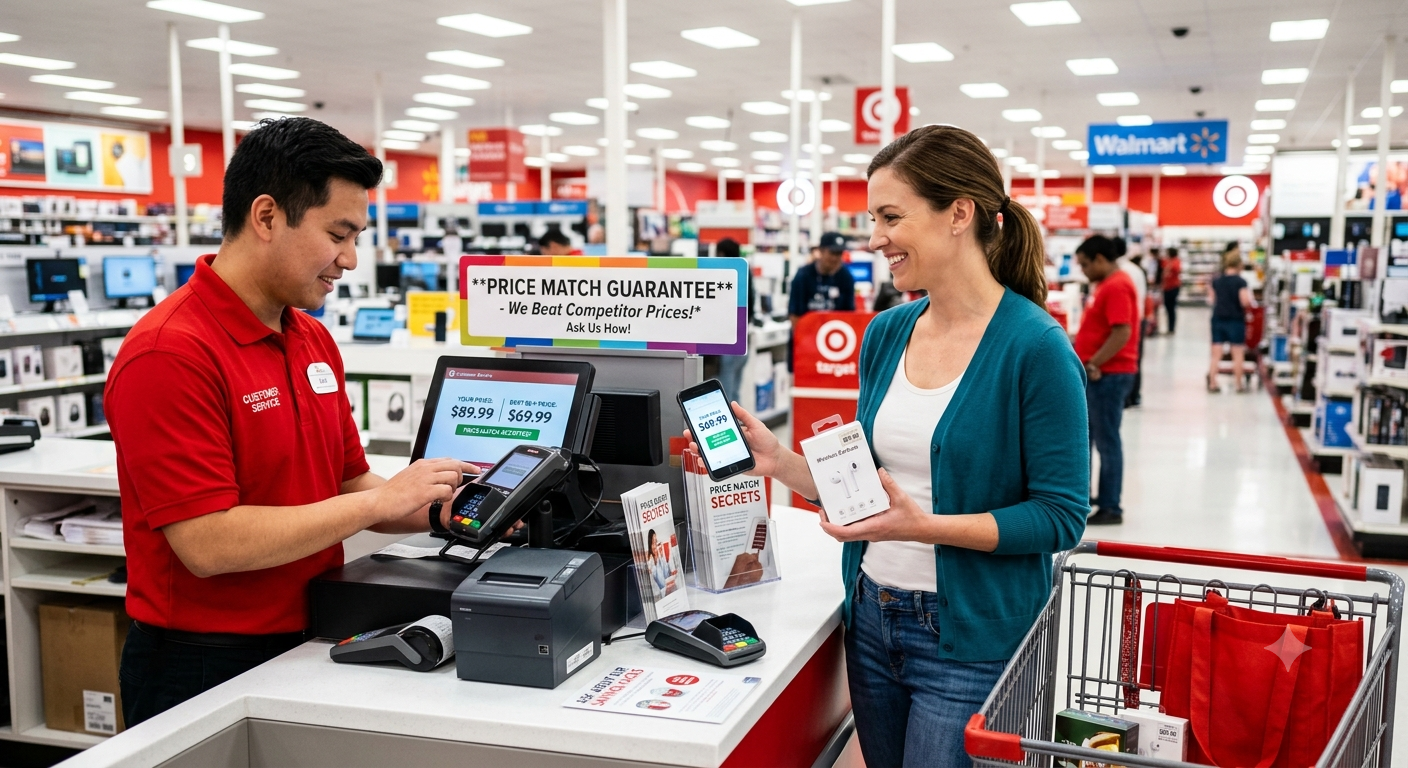
The Hidden Retail Practices That Help You Save Money: Major Stores' Price Matching Secrets Introduction Have you ever walked into a store, purchased a television for $899, and later discovered another retailer selling the exact same model for $749? Most shoppers assume they've lost their chance to save money. The reality is quite different. Many major retailers have price matching and price adjustment policies designed to keep customers from shopping elsewhere. Surprisingly, these money-saving policies are rarely promoted at checkout, leaving millions of shoppers unaware that they could save hundreds—or even thousands—of dollars each year. Whether you're buying electronics, furniture, appliances, groceries, or home improvement supplies, understanding how price matching works can dramatically reduce your expenses. In this guide, you'll learn the hidden retail practices smart shoppers use every day, discover which stores commonly offer price matching, and master strategies that help you pay the lowest possible price. What Is Price Matching? Price matching is a retailer's promise to sell an item at the same price as an eligible competitor. Instead of losing a customer, retailers often agree to reduce their price to match another qualifying store. Example You find a coffee maker priced at: RetailerPriceStore A$79Store B$64 If Store A offers price matching, they may reduce their price to $64, allowing you to purchase from your preferred retailer without paying extra. Why Retailers Offer Price Matching Although it seems like stores lose money, price matching actually benefits retailers. Retailers Want To: Keep customers from shopping elsewhere Build long-term customer loyalty Compete with online marketplaces Reduce product returns Increase impulse purchases after customers enter the store Once customers are inside, they're likely to purchase additional items with higher profit margins. The Retail Pricing Strategy Most Consumers Never Notice Modern retailers use dynamic pricing. Prices can change several times each day based on: Competitor prices Inventory levels Consumer demand Time of year Supply chain costs Regional competition Online shopping trends This explains why the same product may cost different amounts: Online vs. in-store Mobile app vs. website Different store locations Morning vs. evening promotions Price matching helps retailers stay competitive despite these fluctuations. Common Types of Price Matching TypeDescriptionBest ForStandard Price MatchMatches another retailer's current advertised priceElectronics, appliancesOnline Price MatchMatches approved online competitorsOnline shoppersIn-Store MatchMatches prices at local competitorsSame-day purchasesPrice AdjustmentRefunds the difference if prices drop after purchaseLarge purchasesHoliday Price ProtectionCovers purchases during seasonal promotionsHoliday shopping Major Retailers That Commonly Offer Price Matching Many well-known retailers have offered some form of price matching or price adjustment, though policies vary and may change over time. Retail CategoryExamples of RetailersCommonly Price Match?*ElectronicsBest BuyYes (policy-dependent)Home ImprovementHome Depot, Lowe'sYesOffice SuppliesStaples, Office DepotOftenDepartment StoresTargetOftenDiscount RetailWalmartLimited by policyPet SuppliesPetcoOftenCraft StoresMichaelsOften *Note: Always review the retailer's current policy, as eligibility, competitors, and exclusions can change. Hidden Conditions Retailers Don't Emphasize Many shoppers hear "price matching" and assume it's automatic. It isn't. Here are the most common requirements. 1. The Product Must Be Identical Retailers usually require: Same brand Same model number Same color Same accessories Same size Same warranty Even one different feature may make the product ineligible. 2. The Competitor Must Be Approved Most retailers won't match every website. Typically accepted competitors include: National retail chains Official manufacturer websites Major online retailers Often excluded: Marketplace sellers Auction websites Third-party vendors Flash-sale sites 3. The Item Must Be In Stock Retailers usually require the competitor to have the product available for immediate purchase. If it's out of stock, the price match may be denied. 4. Clearance Items Usually Don't Count Most stores exclude: Clearance Liquidation Open-box items Refurbished products Damaged merchandise Black Friday doorbusters 5. Membership Discounts May Be Excluded Prices available only through: Membership clubs Employee discounts Student discounts Military pricing may not qualify. Price Adjustment: The Secret That Saves Money After You Buy One of the least-known retail policies is the price adjustment. Example Monday: You buy a laptop for $1,100. Friday: The retailer lowers the price to $950. If the store allows price adjustments within its eligible window, you could receive a $150 refund without returning the laptop. Many shoppers never ask—and miss out on easy savings. The Best Time to Use Price Matching Some periods offer better opportunities than others. Shopping SeasonPrice Match OpportunityBlack Friday (where eligible)High competition, but many exclusionsCyber MondayExcellent online dealsBack-to-SchoolFrequent price changesMemorial DayAppliance discountsLabor DayFurniture promotionsEnd of SeasonClearance opportunitiesNew Product LaunchesOlder models often drop in price Smart Shopping Strategies That Maximize Savings Compare Prices Before Checkout Use retailer websites, shopping apps, and trusted price comparison tools before paying. Keep Every Receipt Digital receipts make requesting price adjustments much easier. Ask Politely Many customer service representatives are willing to help if you already have the competitor's advertisement available. Shop Midweek Some retailers update prices during the middle of the week. Checking prices before weekend shopping can reveal savings. Monitor Prices After Purchase Continue checking prices for several days or weeks after buying an expensive item. A price drop could mean an easy refund. Stack Discounts When Allowed Depending on the retailer's rules, you may be able to combine: Price matching Store coupons Cashback apps Rewards programs Credit card offers Manufacturer rebates Always confirm whether combinations are permitted. Common Shopping Mistakes That Cost Consumers Money MistakePotential CostNot comparing pricesPaying 10–30% moreThrowing away receiptsMissing refundsIgnoring online pricesLosing online discountsAssuming all retailers price matchMissed opportunitiesWaiting too long for adjustmentsRefund deniedBuying during peak demandHigher prices Estimated Annual Savings The savings from price matching depend on shopping habits. Here's an illustrative estimate: Household TypeAverage Annual PurchasesPotential Annual Savings*College Student$2,000$75–$150Single Professional$5,000$150–$350Family of Four$12,000$400–$900Homeowner$20,000$700–$1,500 *Illustrative estimates only. Actual savings vary based on retailer policies, eligible purchases, and shopping behavior. Who Benefits the Most? Families Frequent purchases across multiple categories increase opportunities to save. Students Limited budgets make every discount more valuable. Homeowners Large purchases like appliances and tools often have greater price-match potential. Tech Enthusiasts Electronics frequently experience rapid price changes. Holiday Shoppers Seasonal competition can create additional opportunities to save. Frequently Asked Questions (FAQ) Do all retailers offer price matching? No. Each retailer sets its own policy, and some do not offer price matching at all. Can I request a refund if the price drops after I buy? Some retailers provide price adjustments within a specified time frame. Policies vary. Can online prices be matched? Many retailers match prices from approved online competitors, but exclusions often apply to third-party marketplace sellers. Can I combine coupons with price matching? It depends on the retailer's policy. Some allow stacking discounts, while others prohibit it. Are clearance items eligible? Usually not. Clearance, liquidation, and open-box items are commonly excluded. Final Thoughts Price matching is one of the most underused tools available to consumers. While retailers often promote low prices, the details of their price-matching and price-adjustment policies are less visible. By understanding how these programs work—and taking a few extra minutes to compare prices, save receipts, and ask about adjustments—you can avoid overpaying on many everyday purchases. Whether you're buying a laptop, refrigerator, power tools, or household essentials, informed shopping habits can make a meaningful difference to your budget over the course of a year. The key isn't simply finding a sale—it's knowing when a retailer is willing to match a better price and how to take advantage of that opportunity.

4The battle between Apple's iPhone and Samsung's Galaxy smartphones has been ongoing for years. Both brands dominate the premium smartphone market, offering cutting-edge technology, powerful cameras, and premium designs. However, when it comes to value for money, the answer depends on what you prioritize: performance, longevity, camera quality, customization, or price.In this comprehensive comparison, we'll break down the key factors that determine which smartphone brand delivers the best value in 2026.Quick Comparison TableFeatureiPhoneSamsungStarting PriceHigherWider range, often lowerSoftware Updates5–7+ yearsUp to 7 years on flagship modelsPerformanceIndustry-leading chipsExcellent flagship performanceCamera QualityConsistent photos & videosMore versatility and zoomCustomizationLimitedExtensiveEcosystemStrongest integrationGood, but less unifiedResale ValueExcellentModerateCharging SpeedSlowerFasterAI FeaturesGrowing rapidlyMore mature AI suiteBest ForLong-term usersFeature-focused buyersPrice ComparisonOne of the biggest factors affecting value for money is the purchase price.CategoryiPhoneSamsungBudget ModelsLimitedMany optionsMid-RangeFew choicesStrong lineupFlagshipsExpensiveOften discountedPremium FoldablesNoneMarket leaderSamsung offers phones at nearly every price point, while Apple primarily focuses on the premium segment.Value Score by Price TierEstimated Value Score by Price TierGeneral value comparison based on features, pricing flexibility, and long-term ownership.0255075100SamsungiPhoneSamsung generally wins on upfront affordability, while Apple often recovers value through higher resale prices.Performance and SpeediPhone AdvantagesApple designs both the hardware and software, resulting in exceptional optimization.Benefits include:Faster app launchesBetter gaming performanceLonger-lasting performance over timeSuperior video processingSamsung AdvantagesSamsung's flagship Galaxy devices offer:Powerful processorsMore RAM optionsBetter multitaskingAdvanced cooling systemsWinner: iPhoneFor pure performance and efficiency, iPhones still hold a slight edge.Camera Comparison4iPhone StrengthsNatural color reproductionBest-in-class video recordingConsistent image qualityExcellent social media optimizationSamsung StrengthsSuperior zoom capabilitiesMore camera featuresBetter night photography in many situationsHigher megapixel sensorsCamera FeatureiPhoneSamsungVideo Recording⭐⭐⭐⭐⭐⭐⭐⭐⭐Zoom⭐⭐⭐⭐⭐⭐⭐⭐Night Photos⭐⭐⭐⭐⭐⭐⭐⭐⭐Social Media Optimization⭐⭐⭐⭐⭐⭐⭐⭐⭐Winner: Depends on UsageContent creators → iPhonePhotography enthusiasts → SamsungSoftware Updates and LongevityBoth companies now offer some of the longest support periods in the Android and iOS ecosystems.FactoriPhoneSamsungMajor UpdatesExcellentExcellentSecurity UpdatesExcellentExcellentDevice Lifespan5–7+ years5–7 yearsHistorically, Apple has maintained strong performance even on older devices, making iPhones a safer long-term investment.Winner: Slight Edge to iPhoneCustomization and User FreedomSamsung offers significantly more flexibility.Samsung FeaturesSplit-screen multitaskingExtensive themesBetter file managementSideloading appsAdvanced widgetsiPhone FeaturesImproved customizationSimpler interfaceBetter consistencyWinner: SamsungPower users generally prefer Samsung.Battery and ChargingFeatureiPhoneSamsungCharging SpeedModerateFasterWireless ChargingYesYesBattery OptimizationExcellentVery GoodSamsung typically offers faster wired charging, while Apple focuses on battery efficiency.Winner: SamsungResale ValueThis is where Apple shines.After 3 YearsiPhoneSamsungAverage Resale RetentionHighMediumMany users effectively reduce their total ownership cost because used iPhones retain value remarkably well.Winner: iPhoneEcosystem Comparison4Apple EcosystemWorks seamlessly with:MaciPadApple WatchAirPodsSamsung EcosystemWorks well with:Galaxy WatchGalaxy BudsGalaxy TabletsWindows PCsWinner: iPhoneApple still offers the most polished ecosystem experience.Who Should Buy an iPhone?Choose an iPhone if you:✅ Want the best long-term resale value✅ Use other Apple devices✅ Prioritize video recording✅ Prefer a simple, reliable experience✅ Plan to keep your phone for many yearsWho Should Buy a Samsung Phone?Choose Samsung if you:✅ Want more features for the price✅ Prefer Android customization✅ Need faster charging✅ Want superior zoom photography✅ Are looking for strong mid-range optionsFinal Verdict: Which Offers Better Value?User TypeRecommendationBudget BuyerSamsungAndroid EnthusiastSamsungMobile PhotographerSamsungContent CreatoriPhoneLong-Term OwnershipiPhoneBest Overall ValueSamsungBest Premium ExperienceiPhoneConclusionIf your goal is to maximize features per dollar, Samsung generally offers better value for money thanks to its wider product range, aggressive pricing, faster charging, and extensive customization options.However, if you consider resale value, long-term software support, ecosystem integration, and overall user experience, the iPhone can provide a better return on investment over several years.For most buyers in 2026, Samsung wins on immediate value, while iPhone wins on long-term value.
Trending Tech Gadgets That Are Actually Worth the Hype: A Confident Guide to Practical Picks and Real ValueYou want gadgets that actually improve your life, not just look good in a video. This post shows which trending devices deliver measurable value—better convenience, clear performance gains, and lasting usefulness—so you can spend on tools that earn their place in your daily routine.Bold the key sentence: Expect practical innovation: the gadgets worth your money solve real problems, save time, or meaningfully upgrade how you work, rest, and play.You’ll see what separates lasting tech from temporary hype, which product categories matter most right now, and how to spot future trends that will keep delivering value.Defining What Makes a Gadget Worth the BuzzYou want gadgets that solve real problems, perform reliably, and fit into your daily routines without extra hassle. The following criteria focus on measurable value, how the product feels to use, and whether excitement matches practical benefits.Essential Criteria for Tech GadgetsYou should first look for clear, measurable benefits. That means fasting charging times, battery life in hours, resolution or sensor specs, and proven compatibility with major platforms (iOS, Android, Windows, macOS). Prioritize devices with real-world benchmarks or third-party tests rather than marketing buzz.Build quality and support matter. Check for warranty length, availability of replacement parts, and regular firmware updates. A gadget that breaks quickly or stops receiving updates becomes useless fast.Value-per-cost beats novelty. Ask whether the gadget replaces multiple items, saves you time, or reduces recurring expenses. If a product costs significantly more than alternatives, verify the specific features that justify that premium.The Role of User ExperienceYou interact with the gadget every day, so ergonomics and interface design should be central to your decision. Look for intuitive controls, logical menu flows, and minimal setup friction. If setup takes more than 15–30 minutes for basic operation, expect at least some buyer friction.Software matters as much as hardware. Reliable companion apps, timely firmware patches, and clear documentation reduce frustration. Evaluate whether integrations with services you already use (smart home platforms, cloud accounts, streaming services) are smooth and secure.Consider long-term comfort and maintainability. Replaceable batteries, washable components, and simple repairability extend usefulness. You benefit most from devices that anticipate everyday wear and make upkeep easy.Balancing Hype and FunctionalityHype often highlights a single standout feature. You should weigh that feature against the rest of the product’s performance. If a camera’s low-light mode is exceptional, confirm autofocus reliability, battery endurance, and post-processing behavior before buying.Look for independent testing and user feedback. Third-party reviews, hands-on tests, and aggregated user ratings reveal common failure points and real-world trade-offs. Don’t rely on viral trends alone; they often omit durability and long-term support.Make a buying checklist before you commit: core specs, cross-platform compatibility, warranty/support, and three real-use scenarios you expect the gadget to handle. If the gadget meets those items, the buzz likely reflects genuine value rather than transient hype.Innovation That Delivers Real ValueThese gadgets turn ambitious engineering into tangible benefits: faster workflows, measurable health insights, and fewer daily annoyances. Expect features that solve specific problems, clear use cases you can apply today, and design choices that extend device lifespan.Groundbreaking Features in Recent DevicesLook for on-device AI that processes voice and image data locally, reducing latency and preserving privacy. That capability lets smart glasses and earbuds give real-time transcription and object recognition without constant cloud trips, so you get immediate results and lower data costs.Battery innovations matter too. Fast-charge chemistries and adaptive power management now deliver multi-day use for wearables and all-day uptime for ultra-thin laptops. Improved thermal designs support sustained performance instead of short-lived speed bursts.Modularity and repair-friendly designs let you replace batteries, storage, or cameras without full-device recycling. That reduces waste and saves you money over time. Sensors with medical-grade accuracy—ECG, SpO2, continuous glucose patches—are now integrated into consumer wearables, offering clinically useful data rather than vague trends.Practical Applications in Everyday LifeYou can use spatial audio and noise-cancellation that adapts to your environment for clearer calls and focused work in noisy cafés. Smart home hubs now coordinate lights, shades, and HVAC based on activity patterns, cutting energy use without manual schedules.Health devices provide actionable alerts: sleep-stage coaching, arrhythmia detection, and guided breathing routines that you can act on immediately. For commuters, compact foldable displays and shareable power banks make long travel and multi-device days manageable.In the kitchen, precision cookers with integrated scales and app-driven recipes remove guesswork. For creators, portable AI-assisted cameras and mics streamline editing by tagging clips and cleaning audio on-device, saving hours in post-production.Longevity Versus NoveltyPrioritize repairability scores, modular parts, and guaranteed OS support windows when you buy. Devices with documented multi-year update commitments retain functionality and security, protecting your investment.Avoid features that exist mainly for marketing—glossy sensors that don’t improve accuracy or gimmick modes that add complexity without benefit. Choose products with replaceable batteries or robust battery-management systems to avoid rapid performance decline.Consider resale value and ecosystem lock-in. Open standards and cross-platform compatibility make upgrades smoother. When a feature directly reduces recurring costs—energy savings, fewer doctor visits, or time saved in workflows—it tends to pay for itself faster than trendy extras.Smart Home Devices Transforming Daily LivingSmart devices now handle routine tasks, boost home safety, and cut energy costs with features you can control from your phone. Expect hands-free voice control, cameras that differentiate people from pets, and appliances that schedule themselves around your energy rates.Voice Assistants and Smart Speakers