+

Discover expert strategic insights, saving updates, and premium dynamic consumer guides.
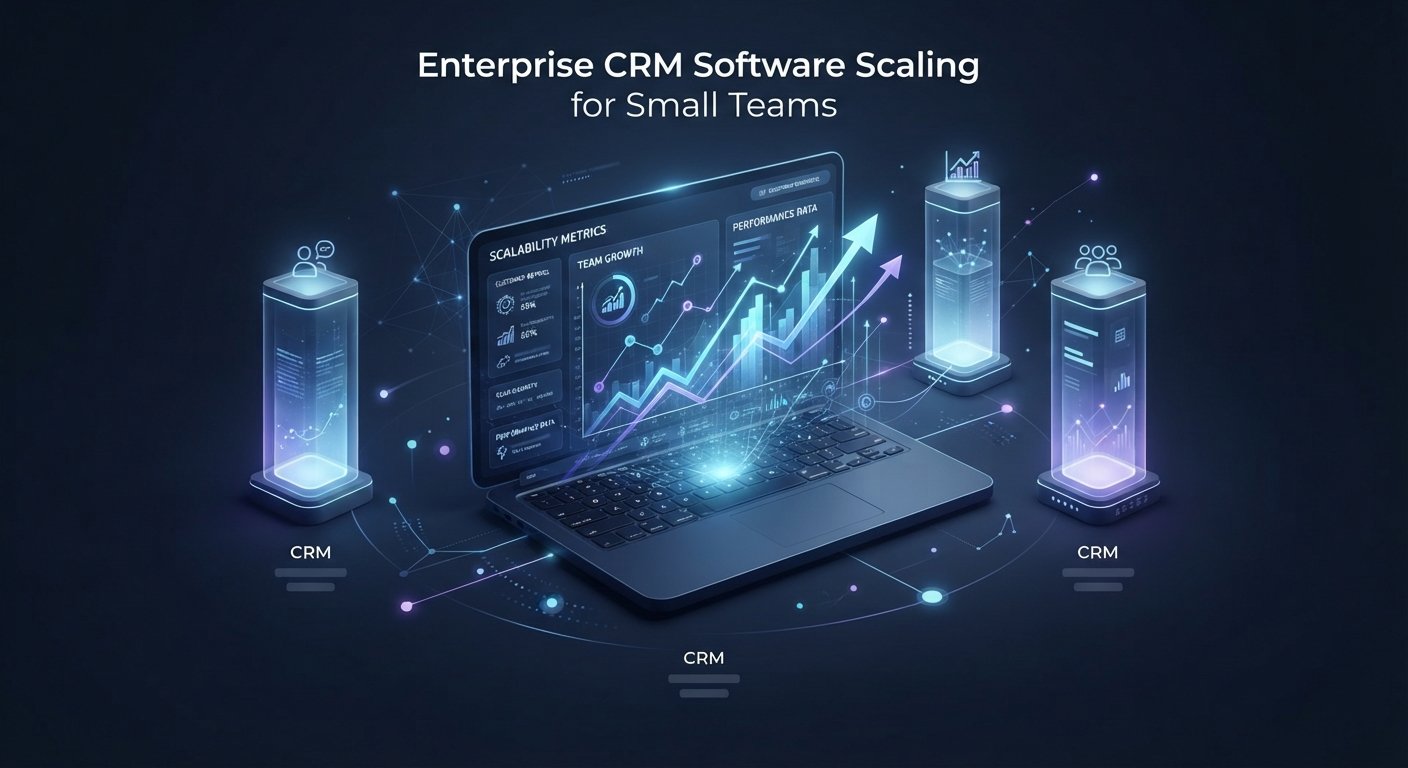
Selecting a Customer Relationship Management (CRM) platform is a defining operational choice for growing organizations. Industry data indicates that the global CRM market is valued at $86.4 billion, with cloud-based deployments capturing over 59.4% of the market share. Furthermore, enterprise software analytics show that 90% of buyers prioritize software with built-in AI capabilities, while up to 94% of businesses report heightened sales productivity after deployment.However, small teams face a distinct challenge: choosing an enterprise-grade solution that scales effortlessly without introducing bloated workflows, prohibitive onboarding fees, or interface complexity.1. Top Enterprise CRM Platforms Evaluated for Small TeamsEvaluating tools meant to scale requires looking past baseline contact management to analyze automation depth, pipeline customization, and long-term licensing overhead.Salesforce Enterprise & Sales CloudSalesforce remains the heavyweight industry standard. It offers deep customization, extensive marketplace integrations, and advanced predictive analytics. While immensely powerful, its steep learning curve and per-user cost structure require careful implementation for smaller teams.HubSpot CRM SuiteHubSpot bridges the gap between enterprise-grade scaling features and intuitive, user-friendly design. Known for its seamless marketing, sales, and service hubs, HubSpot allows small teams to deploy quickly and scale usage tier-by-tier without hitting immediate structural walls.Zoho CRM EnterpriseZoho provides an exceptionally cost-effective alternative loaded with native multi-channel analytics, AI-driven sales forecasting (Zia), and extensive workflow automation—delivering high-end functionality at a fraction of legacy enterprise costs.Enterprise CRM Platform Comparison SummaryCRM PlatformBest ForPricing StructureAverage Promo SavingsSmart Shopping StrategySalesforceHighly complex, customized workflowsTiered per-user/mo15% – 25%Leverage annual pre-pay contracts via affiliate software links.HubSpotUnified inbound marketing & sales scaleScaled subscription tiers20% – 35%Look for startup program credits and verified software coupon codes.Zoho CRMMaximum feature-to-cost ratioBudget-friendly tiers25% – 40%Stack multi-year subscription markdowns with promo links.[IMAGE: Infographic comparing enterprise CRM scalability factors, AI automation tools, and cost metrics for small teams | Alt Text: Side-by-side performance chart of Salesforce, HubSpot, and Zoho CRM scalability features]2. Insider Strategies to Cut CRM Software CostsEnterprise software contracts can quickly inflate operating expenses if licenses are mismanaged. Savvy tech shoppers treat platform procurement as a strategic investment, using active promotional windows to secure baseline discounts.Expert Shopping Tip: Never purchase enterprise CRM seats on a rolling month-to-month basis if you plan to scale. Software vendors offer their steepest discounts (often 20% to 40% off) exclusively on annual commitments or multi-seat bundles. Always check deal directories like FavourSaver Deals to find active promo codes and migration incentives before signing a contract.How to Maximize Your CRM Investment:Audit User Seat Utilization: Prevent paying for dormant licenses by regularly reviewing active users and rightsizing your tier before contract renewals.Capitalize on Migration Credits: Many enterprise CRM vendors offer specialized onboarding credits or free data migration services if you are switching from a legacy competitor.Combine Partner and Affiliate Links: Utilize verified software discount pages to secure waived setup fees or extended trial windows.3. Key Factors for Small Teams Scaling UpScaling successfully requires balancing technical capability against team adoption rates:AI Readiness and Data Hygiene: Ensure your chosen platform features automated data cleansing, because 84% of leaders agree that AI performance depends entirely on clean input data.Omnichannel Integration: Prioritize tools that unify email, social, and phone interactions into a single customer view to eliminate data silos.User Adoption Simplicity: Avoid platforms that suffer from high administrative friction; user resistance is a primary cause of enterprise software abandonment.Summary & VerdictChoosing the right enterprise CRM for a small team means finding the sweet spot between advanced scaling capabilities and user-friendly daily operations. Whether you opt for HubSpot's unified ecosystem, Salesforce's deep customization, or Zoho's unmatched budget value, strategic planning ensures your tech stack accelerates revenue rather than slowing it down.Ready to scale your business operations without paying full retail software prices? Before you commit to a subscription, visit favoursaver.com to browse our daily updated directory of verified coupon codes, software promo offers, and exclusive savings strategies!What specific operational bottleneck or department workflow is driving your search for a new enterprise CRM platform?

The creator economy has evolved faster than ever. What used to require a massive production crew, expensive software, and weeks of tedious editing can now be streamlined using next-generation artificial intelligence. Whether you are scaling a blog, producing viral short-form videos, or designing thumb-stopping graphics, integrating the right AI tools for content creators is the key to staying competitive.In this comprehensive guide, we break down the definitive list of must-have software across writing, video production, audio, and design, tailored for modern creators looking to maximize productivity and audience growth.Why AI Content Creation Tools Matter TodayContent fatigue is real, and audience expectations are at an all-time high. Modern creators face the challenge of omni-channel publishing—managing blogs, newsletters, YouTube channels, TikTok, and Instagram simultaneously.Leveraging AI content generation software frees you from mechanical bottlenecks (like rough cuts, outlining, and transcription), allowing you to focus on what matters most: creative direction, storytelling, and human connection.Breakdown of the Top AI Tools by CategoryTo help you build your ideal tech stack, let's explore the top-performing tools categorized by workflow requirements.1. Writing & Long-Form SEO OptimizationClaude (Anthropic): Unrivaled for complex reasoning, long-form article generation, and maintaining strategic brand tones. It acts as an elite writing partner for deep-dive blog posts and newsletters. ChatGPT (OpenAI): The gold standard for rapid brainstorming, outline creation, and conversational text iterations that draw on contextual prompts.Jasper: Ideal for marketing teams and creators focused on high-conversion landing pages, ad copy, and multi-channel marketing campaigns. 2. Video Generation & RepurposingRunway (Gen-3) & Google Veo: Leading cinematic AI video generators that allow creators to build stunning b-roll, background environments, and motion graphics entirely from text or image prompts. OpusClip: A creator favorite for automatically slicing long-form podcast or YouTube videos into viral-ready short clips for TikTok and Reels. Descript: Revolutionizes editing by letting you edit video and audio files simply by editing a text transcript.3. Voice & AudioElevenLabs: The industry leader in ultra-realistic text-to-speech, voice cloning, and multilingual voiceovers. Perfect for automated narration and localized content. Comparison Table: Best AI Content Creation Tools at a GlanceCategoryTop ToolBest ForStandout FeaturePricing starts fromWriting & StrategyClaudeLong-form articles, researchDeep document reasoning & nuanceFree / $17/moVideo ProductionRunwayCinematic motion & b-rollAdvanced text-to-video capabilitiesFree / $12/moClip RepurposingOpusClipShort-form social clipsAI viral-moment extractionFree / $15/moVoiceover / AudioElevenLabsHyper-realistic narrationCustom voice cloning & emotional tone$5/moGraphics & DesignCanva (Magic Studio)Social media visualsRapid templates & smart layout AIFree / $15/moKey Creator Demographics & Tool Adoption TrendsUnderstanding how different segments of the creator ecosystem adopt AI can give you a strategic edge in your workflow planning:Solo Bloggers & Writers: Heavily rely on LLMs (like Claude and ChatGPT) paired with SEO optimizers to triple their publishing volume without sacrificing quality.Faceless & Automation Channels: Heavily lean on text-to-speech engines like ElevenLabs combined with stock-generative video tools like Runway or Pika to produce scale-driven content.B2B & Corporate Creators: Focus on polished avatar presenters (such as Synthesia and HeyGen) for localized training videos and multilingual product marketing. Best Practices for Using AI Without Losing Your VoiceWhile AI tools dramatically speed up production, over-reliance can lead to generic, repetitive content ("AI slop"). To stand out:Inject Primary Research: Always supplement AI drafts with your own unique data, personal stories, or original case studies.Fact-Check Thoroughly: AI models can hallucinate statistics or outdated guidelines. Keep a human-in-the-loop review process for every piece of content.Refine Prompts for Brand Voice: Train your tools using custom instructions or prompt libraries so the output sounds inherently like you.ConclusionThe future belongs to creators who use AI as a multiplier, not a replacement. By building a streamlined stack—using Claude for writing, OpusClip for short-form video, and ElevenLabs for audio—you can drastically scale your output while keeping your unique creative vision front and center.